

Contractor Lic. No. 940822 | Security Lic. No. ACO1290
© Copyright 2026 SEBASTIAN. All rights reserved.
The commercial electrical system in a building either gets attention on a schedule or on the day it fails. There is no third option, and the difference between the two is what a commercial electrical maintenance program is actually selling.
Facility owners tend to treat electrical maintenance as an operating expense they can defer, because the panel does not visibly deteriorate and the breakers usually hold. What actually happens is that the deterioration is invisible: loose connections heat up, insulation ages, contactors wear, and the failure mode when it arrives is often not a slow one. By that point the choice is not between preventive and reactive maintenance. The choice is between an emergency electrician and a longer outage.
This post covers what a commercial electrical maintenance program includes, how NFPA 70B changed the ground under this decision in 2023, where a maintenance program actually pays for itself, and how to tell whether a program contract makes sense for a specific facility.
| QUICK TAKEAWAY |
| Primary InsightA commercial electrical maintenance program shifts electrical work from unplanned emergency response to scheduled inspection, and the business case turns on how well the facility can absorb an unplanned outage rather than on the direct cost of the program itself. |
| Key FactAs of January 1, 2023, NFPA 70B transitioned from a Recommended Practice to a Standard, meaning its preventive-maintenance provisions moved from advisory guidance to mandatory requirements wherever the standard is adopted. It now sits alongside NFPA 70 (NEC) and NFPA 70E in what NFPA calls the electrical cycle of safety. |
| Best Suited ForFacility managers, property owners, and business operators weighing whether to sign a maintenance contract, evaluating an existing one, or trying to understand the cost of not having one. |
A commercial electrical maintenance program is a scheduled contract between a facility owner and a licensed electrical contractor to inspect, test, and service the building’s electrical system on a defined interval, typically annual or semiannual, plus emergency response at pre-negotiated rates. The scope varies with facility complexity, but a typical mid-size commercial contract covers the main service, distribution panels, transformers, switchgear, motor control centers if present, generator and transfer switch, UPS if present, grounding system, and the branch circuits serving critical loads.
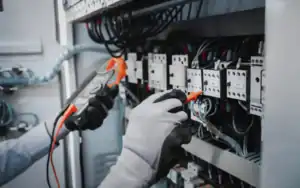
The specific activities inside those inspections are what separates a program contract from an inspection call. A program includes infrared thermography (thermal imaging of panels under load to detect hot spots from loose connections), torque verification on major terminations, insulation resistance testing where warranted, breaker function testing, generator load testing, and documented inventory of the system with condition notes. Everything gets recorded, and each visit builds on the last visit’s baseline.
Emergency response terms are the piece facility owners often skip when reviewing a program contract, and they are frequently where the real value sits. A program contractor already has the building’s electrical system documented and typically responds faster and at negotiated (not emergency) rates when something does fail.
The regulatory ground under commercial electrical maintenance changed materially on January 1, 2023. On that date, NFPA 70B, Standard for Electrical Equipment Maintenance, transitioned from a Recommended Practice to a Standard. That change is not cosmetic. Its provisions moved from advisory guidance to mandatory requirements wherever the standard is adopted or referenced, and it now sits alongside NFPA 70 (the National Electrical Code) and NFPA 70E (electrical safety in the workplace) as the third leg of what NFPA calls the electrical cycle of safety.
NFPA 70B applies to preventive maintenance of electrical, electronic, and communication systems and equipment in industrial, institutional, commercial, and large multi-family residential buildings. It requires facility owners to establish an Electrical Maintenance Program (EMP) with defined personnel qualifications, planned inspections, survey and analysis, and documentation. The scope is broad, and the compliance path is a maintenance program, not a single inspection.
For California facilities, this matters even when the standard is not directly cited in a building code, because OSHA’s general industry electrical standard (29 CFR 1910 Subpart S) draws from NFPA electrical standards for workplace safety requirements, and a facility without a documented maintenance program is on the wrong side of an incident investigation regardless of whether the inspector opens the NFPA 70B binder or not.
A commercial electrical maintenance program pays for itself in three places, and understanding which one matters most for a specific facility is what turns the decision from an abstract debate into a straightforward calculation.
The first is direct repair spending. A yearly program contract for a mid-size commercial facility costs a specific, predictable amount, and it displaces the emergency call-outs that would otherwise show up unscheduled. Emergency electrician response is billed at rates well above standard commercial rates, plus travel and materials, and every emergency repair also carries the diagnostic time that a program contractor has already invested during scheduled visits. Predictable spending replaces unpredictable spending, and the annual number is almost always lower.
The second is outage duration and frequency. Every hour a commercial facility is down carries lost revenue, spoiled inventory in some businesses, missed contractual obligations in others, and cascading costs across dependent systems (HVAC, IT, refrigeration, life-safety). A facility with a documented maintenance program does not eliminate outages, but it prevents the ones that come from deteriorating connections and worn components, and it dramatically shortens the ones that still happen because the responding contractor already knows the system.
The third is insurance. A commercial property insurer investigating a fire or equipment failure claim will ask what maintenance program was in place. A facility that can produce inspection records, thermographic reports, and a written Electrical Maintenance Program has a stronger claim position than one that cannot, and the coverage terms of many commercial property policies now reference maintenance program compliance directly. On a large claim, this factor alone can outweigh several years of program cost.
A well-scoped commercial electrical maintenance contract answers five questions on paper before the first inspection.
Scope of equipment covered. Every panel, disconnect, transformer, transfer switch, generator, and UPS should be listed with location and served load. A contract that describes coverage as “the building’s electrical system” without inventory produces disputes at year two when equipment is added or replaced.
Frequency and season of inspections. Annual is the floor for most commercial buildings. Semiannual is common where the facility has generator equipment, medical or laboratory loads, or manufacturing loads. Inspection scheduling should account for building operating cycles: a retail facility should not have its main panel de-energized during peak season.
Specific tests performed. Infrared thermography is a floor requirement. Torque verification, insulation resistance testing, breaker exercising, and generator load testing are common additions and should be listed by name, not implied.
Deliverables. A report per visit with photos, findings, and condition ratings, plus a running facility electrical inventory maintained across visits. Reports that arrive as a single-page checklist add little value.
Emergency response terms. Response time commitment, hourly rate for after-hours calls, and how travel is billed. These are the terms that matter on the day the maintenance program has to pay for itself.
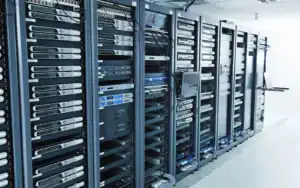
A commercial electrical maintenance program almost always makes sense for facilities where an unplanned electrical outage carries direct revenue loss, safety obligations, or downstream damage. That includes manufacturing, cold storage and food service, healthcare and dental, data centers and server rooms, laboratories, retail with refrigeration or extended hours, and any facility with a backup generator that has to be tested annually anyway.
The case is weaker for facilities where the electrical load is small, the equipment is new, and an outage is inconvenient rather than costly. A small office in a leased building where the landlord maintains the base electrical infrastructure may not need its own program contract, though it should still confirm the property manager has one covering the shared systems.
The middle case is where most facility owners actually sit, and the decision usually comes down to whether the facility can absorb one full day of unplanned outage without material business impact. If the answer is yes, a reactive posture may be defensible. If the answer is no or unclear, the program contract is not really a choice.
A typical commercial electrical maintenance contract includes scheduled inspection of the main service and distribution panels, infrared thermography of major terminations under load, torque verification of critical connections, testing of breakers and transfer equipment, generator and UPS servicing where applicable, documented reports with condition ratings, and negotiated emergency response terms for outages between scheduled visits.
Commercial electrical maintenance programs are not universally required by a single California statute, but multiple regulatory pressures point toward one: NFPA 70B (adopted as a mandatory standard as of January 1, 2023) requires an Electrical Maintenance Program wherever it is referenced, OSHA’s general industry electrical standard requires safe working conditions that assume maintained equipment, and property insurance policies increasingly reference maintenance program compliance in coverage terms.
Commercial electrical equipment should be inspected at least annually for standard facilities and semiannually for facilities with backup generators, medical or laboratory loads, manufacturing equipment, or business-critical infrastructure. Individual components may have shorter cycles: infrared thermography is typically annual, generator load testing is annual or more frequent depending on class, and switchgear testing intervals vary with duty cycle.
Infrared thermography is a non-contact inspection technique that uses a thermal camera to detect heat signatures in energized electrical equipment. Loose connections, failing components, and overloaded circuits generate heat before they fail visibly, and thermography identifies them while the system is still running so they can be corrected on a planned outage rather than an emergency one.
In-house maintenance staff can perform some routine electrical maintenance tasks in California only if they hold the appropriate qualifications. Most substantive electrical work in a commercial facility requires a licensed C-10 electrical contractor. In-house staff can typically handle visual inspections, cleaning, and lamp replacement, but energized testing, torque work on major terminations, and any wiring changes fall to a licensed contractor. Most maintenance programs are structured to combine in-house daily attention with contractor-performed periodic work.
The choice between a scheduled commercial electrical maintenance program and reactive emergency service is not a preference. It is a business-continuity decision about which cost the facility is willing to carry: a predictable annual expense, or an unpredictable emergency plus the outage that comes with it. NFPA 70B has moved the ground under that decision by turning maintenance from a recommended practice into a standard, and property insurers have followed by referencing maintenance compliance in coverage terms.
Sebastian Corp’s commercial electrical team builds maintenance programs for facilities across the Central Valley, from single-panel commercial buildings to multi-building industrial sites, with the inspection scope and reporting cadence tuned to what each facility actually needs. For a straightforward conversation about scoping a maintenance program that fits your facility, request a proposal.


Contractor Lic. No. 940822 | Security Lic. No. ACO1290